
The fire hormone (inflammation triangle) defines fire: fire is a chemical reaction and is the rapid oxidation of flammable materials. For the fire to happen, three elements must exist: flammable material, oxygen and a flare source.

The definition of fire: fire is a chemical reaction and is the rapid oxidation of flammable material. For the fire to take place, three elements must be found: flammable material, oxygen and flammable source; these are represented by the so-called ignition pyramid (Fire Tetrahedron) as described in the form. Each of its ribs represents one of the three elements (article, oxygen, ignition source) while the fourth rib represents fire fire, the sequenced chemical reaction, so the four elements of ignition are:
1. Flammable material (Fuel (Combustible Substances2-air (oxygen) ( Air (Oxygen3-Heat( Sources) Sources of Ignition4-Chemical Interaction Chain Chemical Reaction1- Fuel (flammable material): flammable substances are: solid, liquid, gaseous substances. Solid substances: Like wood, cloth, paper, cartoon, liquids, like carpentry, solvents, alcohol, gasoline, acetylene, hydrogen.

Air (oxygen): All materials need oxygen to burn, and oxygen in the atmosphere is about 21%, and oxygen must not be less than 16% until the fire continues. Each substance must be united with oxygen at certain proportions of its so-called ignition limits (Flammability Limits), and for each article called the lowest flammation LEL and higher flammation. For car gasoline flammation is 1.6% and 7% higher, so if 1.6% of petrol fumes unites with 98.4% of the air to be a flammable mixture if there is a flammable source, and if 7% of gasoline fumes are united with 93% of the air, it will also be a flammable mixture if there is a burning source. Any mixing of car gas and air fumes between these two numbers (1.6%, 7%) will be a flammable mixture if there is a source of ignition.
3. Temperature (inflation sources): heat is the energy required to increase the temperature of flammable material to the extent that it generates a sufficient quantity of ignition and flammable sources. (a) Electricity: Electricity from the most inflammatory sources is considered to cause fire, by overloading the undelivery of wires in a proper manner, damageing electrical wires or damage to their buffers, damage to electrical equipment and appliances. b. Smoking at the second post-electoral centre causes fires. Most of these fires occur because of cigarettes or burning cigarette residues on furniture or when smoking in sleep. c. Hot work (cuts and welding): fires occur because of welding and cutting work in places containing flammable materials due to volatile sparks, or for masculine metal, if welding and interruptions are carried out without the necessary safety measures. Cigarettes, flags, sulphurs, heaters and wastes that may cause ignition of adjacent flammables. Hot surfaces such as furnaces, gloves and hot surfaces, where heat moves from them to near or adjacent material through thermal delivery and ignites these materials.
D. Self-ignition: Some materials have chemical reaction (oxidation) causing high temperatures and these substances maintain temperatures and do not allow for leakage to the ocean atmosphere. These are: * Plant, animal and fat oils, when straw parts are used to clean up these materials, long scraps, oxidation, temperature rise and temperature continue to rise. Failure to leak to the air is sufficient to flare the pieces of cloth and thus burn to the point where a fire is taking place. Estonian electricity produces two things of friction (e.g. petroleum material in oil pipelines) and accumulates until it reaches a point where it can cause a fire in any nearby inflammable material. * Congestion: In the event of friction between parts of the machines, temperature rises may cause ignition of flammable material close to these equipment and machinery, as well as when using handicrafts such as road tools at work close to flammable materials, the spark from road operations may cause flares.
* Serial chemical reaction: fire continues to ignite as long as the three elements (article, heat, oxygen) are present in the right proportions, and from these elements, effective chemicals known as the free Radicals, the fire continues and is known as the sequenced chemical interaction.
Fire types Fire Classes: Fires are divided into types by type of burning fuel, and there are six types of fire by European system: fires of type:

1. (a) Fires in solid materials such as wood, paper, clothing, rubber, some plastics, and the best fire materials used to fire this type are water, as well as some dry powder (ABC)

Type B fires: fires in inflammable liquids such as car gasoline, kerosene, solvents and alcohol; one of the best fire materials used to extinguish this type of fire is foam, carbon dioxide, halon and powder, and the use of water to combat this type of fire is not preferable to increase the spread of fire.

3. Type C fires: fires originating in gases such as potatoes, acetylene and the best types of waste used to fire these fires are powder, carbon dioxide, halon (halon alternatives).

Type (D): Fires originating in metals such as sodium, potassium and magnesium. A special type of dry powder is used to fire this type.

5. Electricity fires (E): fires originating in connections and electrical equipment, and the best kind of fire extinguishers are powder, carbon dioxide (CO2) and halon (halon alternatives).

6. Type F fires are a modern type of fire that has recently been added to fire types and concerns fires with plant oils in kitchens.
The most common and used types of fire extinguisher are: 1. Water Fire Extinguisher. 2. Carbon Dioxide Fire-3 Dry Chemical Fire.
4. Foam Fire Exting.

Water extinguishers: used to extinguish the type A fires, 2.5 gallons and compressed up to 150-175 pounds on the compressed air flare with a pressure signal showing the state of the extinguishment during the examination, they can hurl the compressed water into them up to 9-12 metres. The fire is extinguished by refrigeration. It is not used at all to fire electric fires, as water is connected to the electric stream, which may cause the use of fire to be licked. It is also not used to extinguish fires originating in petroleum and fast-flamming liquids, as water helps to increase the spread of such fires.

foam extinguishers (light water foams): Film filling with concentrated foam is flammable in water and are pressured by compressed air or nitrogen.

Buder extinguishers: Buddhites and the powder type within them are used to extinguish fires originating in solids (A) and inflammable liquids (B) are also used for fire extinguishing in electrical appliances and are usually explained to the extinguisher types of fires that are fit for fire extinguishing. Computer, where powder particles may cause damage to these devices, fire extinguishing powders by striking fuels with a layer of powder separating fuel from oxygen in the air, also overlaps with serial chemical interactions and absorbs loose flasks Free Radicals on the surface, thereby halting this chain reaction and extinguishing the fire. So the powder is considered to be one of the fastest fire materials. There are two types of powder waste, i.e., compressed powdered powdered powders by air and compressed powders by carbon dioxide cylinder. Potassium, type ABC or monox powder, depending on the spectrum capacity, then the spectacular air pressure is activated until the marker in its pressure hour indicates green. In the use of the mud, the safety and pressure are removed by operation, which in turn allows compressed air within the spectrum to exit with the power of powder to outside the spectrum to a distance of up to six. 6 meters or more. For the pneumonia of the compressed powder by CO2 cylinder,

The extinguisher is filled with powder and there is a small cylinder containing carbon dioxide (CO2) in the use of the extinguisher, which is pressured by the extinguisher, where a nail opens the small cylinder, and hence the carbon dioxide gas exits, and thus allows the powder to be released outside the spectrum.

Carbon dioxide (CO2) waste: The extinguisher is mobilized by a pressure of up to 800 pounds on the square inch and, when used, the safety nails are withdrawn and pressures are activated. The gas exits are pressured out of the spectrum. CC2 gas extinguishes by strangulation and denial of access to fire oxygen.
Halon Wastes (halon replacements) filling the mud with halon powder (BCF), a steaming substance with a high fire extinguishing capacity and being pressured by nitrogen until the index at the pressure clock on the mud indicates green, and when used, the safety nails and pressure are withdrawn by operation in the nitrogen gas pushing halons up to a distance of 6 tyres. Or more, the halon interacts with, and immediately shuts down, the ultraviolet chemistry, as halons of substances that have a harmful effect on the ozone layer that protects us from the danger of ultraviolet radiation from the sun have now been suspended and their use is currently being used for non-ozone substitutes. (Halone replacements)
Dry powder kits: used to fire metals such as sodium, magnesium. Filled by dry powder. They are not used to fire any kind of fire other than fires in metals.

Liquid powder: it contains a melted powder in the water and is pressurized by compressed air so that the index at the pressure hour indicates green. It is fit to fire the type AE-Fame fire within which the material is to be thrown up to 3-4 metres. The fire is extinguished by refrigeration and the formation of an insulation layer.
1. An author must provide a scheme showing the location of all firefighting equipment, entrances, rescue exits, evictions and escape routes, specifying areas of assembly points and also identifying the routes of the required firefighting equipment/entry equipment and fire vents at work site 2. The employer must develop a fire protection plan to comply with during all stages of construction and demolition work, or the workplace, and must provide the necessary equipment to resist the fire. The fire protection plan must include procedures to be followed in emergency situations, a fire at the site, procedures and steps to vacate the site or the building, training all personnel on such procedures, and the need to conduct periodic experiments to ascertain the effectiveness of such procedures, as well as the name and number of the person/person/responsor/taker to comply with the fire prevention plan.
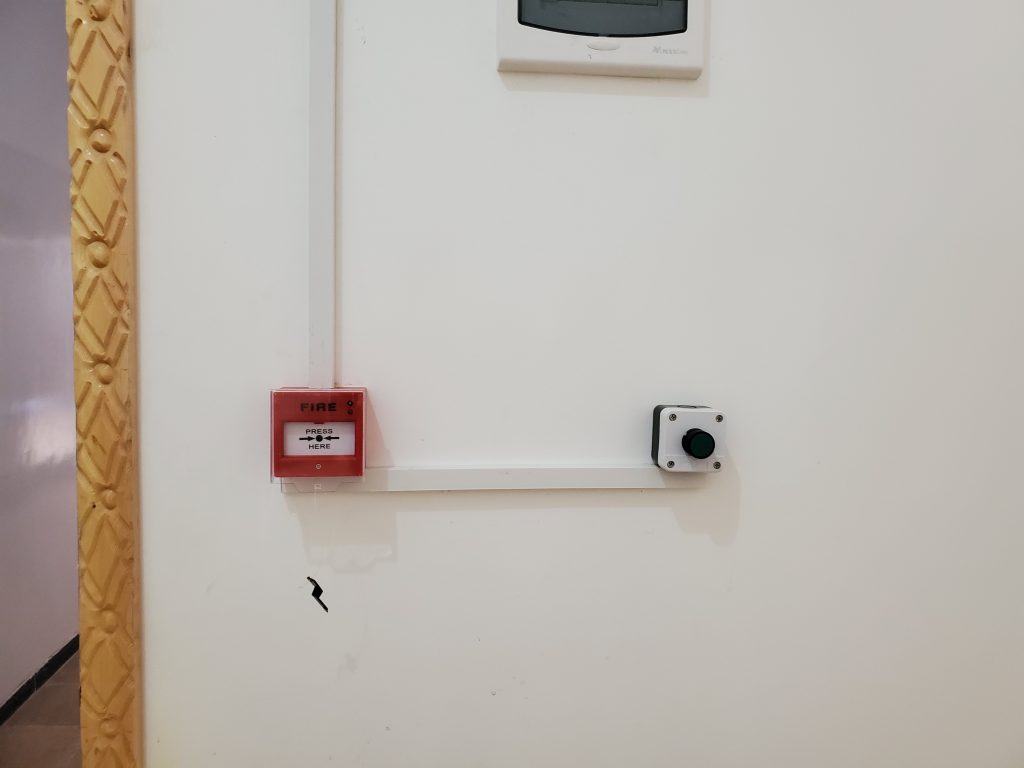
4. The site must be provided with a warning facility (Yedu or Automatic) for use in fire or other emergency situations to alert and evacuate employees from the site or building. 5. A qualified staff member must be assigned to the site to inspect all firefighting equipment and ensure that it is fit to work periodically and to provide it with appropriate training to perform this work. All roads leading to firefighting equipment must be kept free of impediments at all times, and all construction sites must be open to the arrival of civil defence equipment/cars through interdiction-free routes of at least 6 metres (20 feet) and be able to carry the firefighting equipment load.
7. The exit routes of staff and construction workers must be maintained free and protected from residues, hazards of hazardous materials and any other impediments at all times. If any of these exits is closed, an alternative exit must be provided. 8. All vehicles must be stopped at 6 metres (20 feet) from new buildings/under construction. Firefighting equipment must be placed in known and accessible locations at all times and clear to all site personnel. Civil defence personnel must also have access to all civil defence equipment/links, extension fuses and all components of the external fire prevention system at all times. Guidance boards that clearly determine the location of any of those components should be developed whenever they cannot be seen. A periodic inspection and maintenance of all firefighting equipment must be carried out in good condition and equipment with defects must be replaced immediately. 11. The contractor must provide workers with adequate firefighting training. 12. Appropriate means of survival and the maintenance of corridors, doors and ladders are to be provided at all times, given the changing nature of construction operations, methods of survival must be examined on a regular basis. Emergency lighting must also be provided on each floor so that the lighting is not less than 50 Lux and, in particular, near emergency exits.
13. The number of emergency exits must be provided in each building under construction by the number of staff in the building, up to at least two exits per floor on the ground floor.

14. Appropriate boards and markings must be made available at the site or building indicating the evacuation routes (Escape Routes) from the site or building to be used by all emergency personnel until access to assembly points. 15. Smoking is strictly prohibited anywhere, either inside or on the roof of new buildings under construction or even in the buildings under maintenance, with sufficient numbers of smoking bans available on site. 16. No hot work (Hot Works) involving welding, cutting, heating and burning works is carried out without a hot work permit issued.
17. The floors of the building must be uploaded from the inside and from the outside to make it easier to identify them in emergency situations.
18. During demolitions involving combusible materials, fire excavators and pumped water tank trucks must be provided.
Fire control systems and equipment for projects under construction: mobile equipment:
1. A programme must be developed to ensure that mobile fire extinguishers are fully filled and in a working condition — located at all times at their designated places. 2. Wastes must be placed in visible places in the usual corridors and accessible and accessible. The location of the fire extinguishers must be marked by a red square above every tyrant and, if possible, by the paint of the wall behind every red-colored extinguisher in places where the extinguisher could not be seen because of barriers that might block its sight.

4. The location of the extinguisher must be marked by a marked mark and an appropriate height, which refers to the location of the excavation. 5. All excavators must have clearly defined markings in order to facilitate the selection of the appropriate type when a fire occurs. 6. All manual waste must be placed on pregnant women or in their own boxes or on a shelf, except for wheeled waste. 7. Hand-held waste should be suspended so as not to exceed the altitude of the upper part of it: 1.5 metres (5 feet) of the Earth - for children with a total weight of 18 kg (40 pounds) or less. at 1 m (123 feet) of the surface - for those with a total weight of 18 kg (40 pounds).
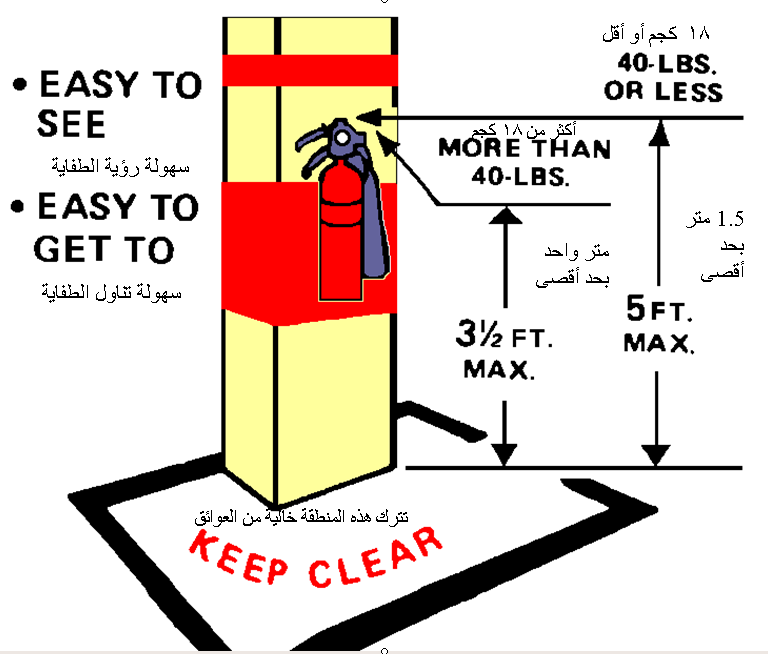
8. The extinguisher must be suspended so that its distinctive markings and operating instructions are on the outside side. 9. Various types of waste must be available to protect buildings according to the type of flammable material that may exist in the building. Fire extinguishers must be dispersed at easily accessible locations and not more than 15 metres (50 feet). 11. At least one mobile fire extinguisher shall be set at least one type and an hour designated by the relevant authority at least 8 metres) and no more than 15 metres from any storage area for liquids that are flammable. Fire extinguishers must be provided in each of the multi-role buildings according to the above-mentioned requirements. In addition, at least one extinguisher is placed at each exit zone.
13. Wheeled or mobile waste, which is placed in open spaces, must be protected from direct sunlight or surrounding weather conditions, using appropriate cover. 14. If any extinguisher is used, it must be immediately repackaged and returned to its designated location. All mobile fire extinguishers must be inspected at least once a month to ensure that they are located in their designated locations and that the operating barrier (Seal) is not broken and that there is no damage or defects. 16. The maintenance of all fire extinguishers must be carried out carefully each year, including the screening of mechanical parts, their contents of fire materials and means of payment for contents, repairing any defects that may exist or replacing the spectrum with proper others.

17. A poster or card must be placed on each extinguisher showing the date on which it is packed and maintained - and the name and signature of the person who has performed the examination and maintenance work. 18. Alternative fire extinguishers to be removed from its sites must be assigned to carry out maintenance work.


Total Protection Regimes, Fire extinguishers and Yemeni safety equipment info@safetytotal-ye.com 0151515316-
773945471
www.safetytotal-ye.com
Yemen Railway Branch Mossa Street, Zabar entrance, Asody Line