
Smoke Dampers Fire Protection negative products used in air-conditioning and ventilation streams or stabilized in physical smoke barriers (e.g. walls). This may be done to prevent the spread of smoke from the scene of the fire...
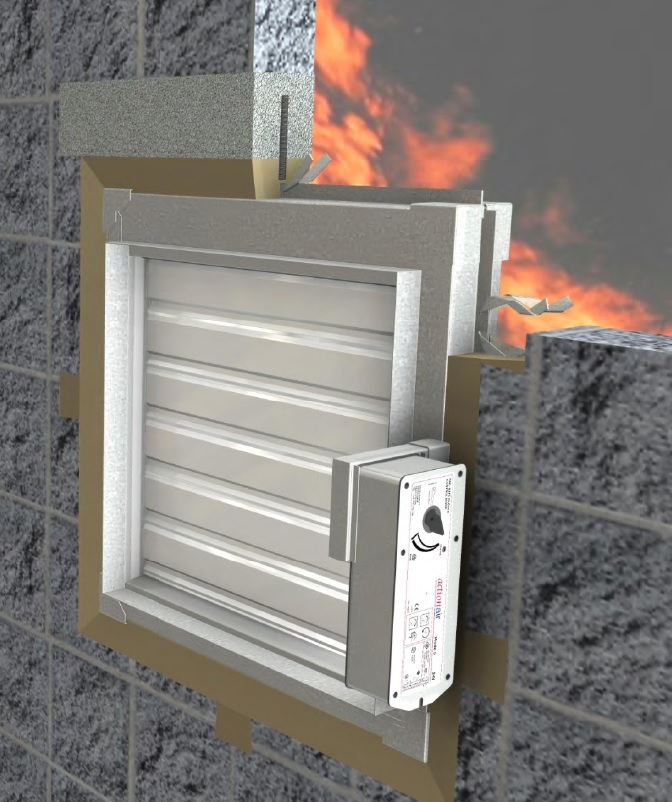
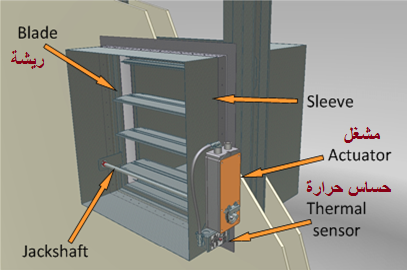
Smoke dampers are passive fire protection products, Passive Fire Protection, where they are used in air and ventilation streams or installed in physical smoke barriers (e.g. walls).
This may be done to prevent the spread of smoke from the scene of the fire to other adjacent areas in the same building.
A combination of Fans and Dampers can deplete or withdraw smoke from the smoke-affected area while adjacent and smoke-free areas (to prevent smoke infiltration into additional areas) can also be used to maintain the required concentration of fire extinguishing gas (the clean firefighter Fire Suppression Clean Agent) around the fire.

As established in supply air channels to restrict air entry into space, it is also stabilized in the air streams of return Air Ducts or exhaust Exhaust Air Ducts to reduce the rate of fire gas leakage from within the space.
Smoke dampers can be activated and sealed by Fire Alarm System, usually operated by Smoke Detectors, or interlocked with Fire Suppression System, Smoke Dampers will be sealed by an electric operator, Electric Actuator, Pneumatic Actuator Actuator, or a trigger operator. Reset can be reset either manually or opened with a re-open signal reaching the electrical or antenna operator.
According to Underwriter’s Laboratory,
“The smoke tanks approved by UL have a breakdown of the Leakage Class Rating class showing the level of air leakage measured through the damper under test conditions.
Fire Dampers and Smoke Dampers are an integral part of the passive fire protection system for the building. Walls and fire-resistant floors.
Fire dampers are like firecrackers in Fire Resistance Rating, in addition to their ability to prevent the spread of smoke inside airstreams.
When the temperature rises, the fireplace is closed, Fire Damper, usually activated by the armal element Thermal Element is melted at higher temperatures than the Ambient temperature but low enough to indicate a fire, allowing the tanks to shut down the damper Blades. Fire extinguishers can also be closed after receiving an electrical signal from the fire alarm system connected to Detectors ' detectors away from the temple, indicating a heat or smoke sensor in the building ' s inner space or in the airway system of the HVAC central air conditioning system... when temperature rises, the fire junction will close fire fire damper and prevent flame spread across the barrier. The baptisms are like the curtain that closes at the melting of a squeaky link.
Fusible Link is usually melted when the temperature rises to 165 degrees Fahrenheit, and in some cases hypertensive connections (e.g. 212 degrees Fahrenheit) are stabilized in air streams during which high temperature air passes in natural condition.
Fire extinguishers from Underwriters Laboratories UL laboratories are approved with hours of fire resistance, usually from 1.5 to 3 hours.