
Firefighting Equipment
It's very important.
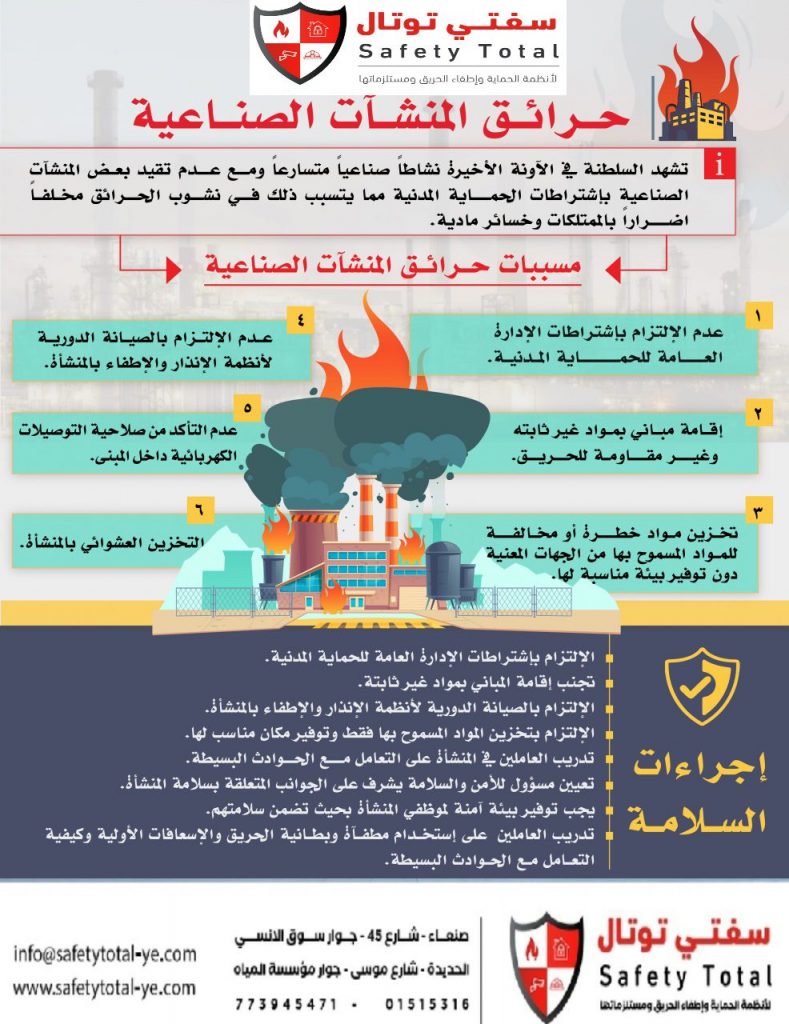
Fire prevention in industrial establishments. All official advisory international bodies and standards on occupational safety and health have always called on other industrial companies to adhere to the processing of buildings and factories by means of prevention such as identity, surviving exits, alarms and fire extinguishers in order to preserve the safety of employees and the Foundation from the fire.
All insurers and all States of the world also require, in accordance with their approved requirements and always, the processing of industrial establishments and companies that may be exposed to human or material accidents to equip their installations and sites with various protection systems (controlled cameras, fire alarms, cylinders, manual fire cylinders, protective devices and rescue-... Prior to approval of their accreditation as the insurer of these companies and dissidents.
- Industrial installations of various kinds constitute the fundamental and vital part of the economies of most States of the world.
Industrial installations are exposed to incidents such as fires and explosions that cause human damage to workers as well as enormous economic losses. - Industrial buildings must be given full care and self-protection systems must be built to protect workers and industrial enterprises on a permanent basis.

Building study
Phase I begins with the building ' s study to determine the extent to which it resists fire and is suited to the activity, thus identifying the holes in the walls, roofs and floors that facilitate the entry into force and fire heat from the fire.
- Some basic fire prevention procedures in industrial enterprises are defined as follows:
Safety and safety systems in factories and fire suppression systems in Yemen fire alarm systems sales and absorption of Yemeni fire extinguishersInstallation of fire-resistant doors and construction of fire-saving ladders that are adjacent to construction or establishment.

Failure to close doors during periods of operation and close them upon completion of work.
Use fire-resistant glass in windows and use metal curtains on them.
Take the necessary precautions to prevent the spread of fire with manoeuvres, drawers and elevators.
Storage petroleum and flammable materials away from the sources of fire.
Use, wherever possible, non-flammable materials in construction of installations.
Outsides of survival.
Survival exits are an important element of public safety and are vital to the safety of workers within industrial enterprises, as when an emergency incident occurs, workers resort to a safe and remote exit from the source of danger.
The number of life exits must therefore be combined with the number of workers in each part of the building and be commensurate with the anticipated risk.
The safety of all citizens from fires and the reduction of economic losses must be preserved through the following recommendations concerning escape routes:
You need to open the doors out and be easy to open.
Leave the doors open for the duration of the work if the activity is too dangerous.
No impediments to exits.
Installation of smoke-proof tunnels and doors in the routes leading to escape routes.
Clarification of the locations of exits used as escape routes with clarification of the opening of doors.
Provision of back-up lighting in escape routes.
Explanatory plates for escape exits were clarified and lit when necessary.

Lighting and electrical equipment
Fire prevention and explosions in industrial installations resulting from electrical appliances require:
:: The building is equipped with secure electrical installations that prevent the occurrence of heat rays from lamps or other heat effects in areas containing fumes, gases, flammable soils or explosions.
• Provide an easy way to cut the power supply so that it can be used easily when there is an emergency.
:: Securing more than one power source and placing it in underground protected areas.
Ensure periodic and regular maintenance of electrical installations and equipment.
Thermal appliances.
Since thermal apparatus is an essential and fire-generating element, prevention requires commitment to the following recommendations:
Appropriate oven and warming sites for other activities and warehouses.
Appropriate location of thermal fuel tanks.
Appropriate fuel supply formulations.
Gas pipes shall be metal and, in the case of the use of the cochoke or other material, shall be detected from time to time to ascertain their safety.
On the other hand, industrial buildings must include vents, so the following recommendations must be adhered to:
Assess the adequacy of natural ventilation through windows and doors.
Adequate ventilation in some places is likely to provide flammable fumes, gases or soils, and in general listing and escape routes.
Hygiene for air-conditioning systems.
Warehouse ventilation is provided through the creation of inter-built areas and the removal of explosive sections.
Firefighters
In the same context, the equipping of buildings must take into account the following firewalls:
Distribution of appropriate fire sets according to the size of the plant and the type of fire likely to occur.
Maintenance and periodic refurbishment of equipment
Preparing the building with automatic machine guns or water spray system in cases where required and ensuring that it is tested at least once a week.

Storage:

The storage spaces for flammable materials must be safe, as follows:
Examine the adequacy of the storage site for thermal sources.
Determination of quantities of stored materials.
Take into account security precautions for the storage of petroleum and hazardous materials.
Not stored in non-places that are well reserved.
It should be noted that it is necessary to make the storage area unavailable and to use buffers to reduce the spread of fire if it occurs.
Fire alarms.
All we rushed to discover the fire, the less the damage is, from here, we must commit to:
Determination of the alarm system appropriate to the nature of the place.) An audio-visual and light-warning system connected to a centralized control panel - FM200 system - Aquatic fertilization system/fire sensors attached to an alarm board with water matttresses working when ascertaining the location of a fire.
Distributing the alarms inside the place well.
The building is equipped with automatic alarms at places left for long periods without censorship.
Find a way of communicating to the nearest fire point.
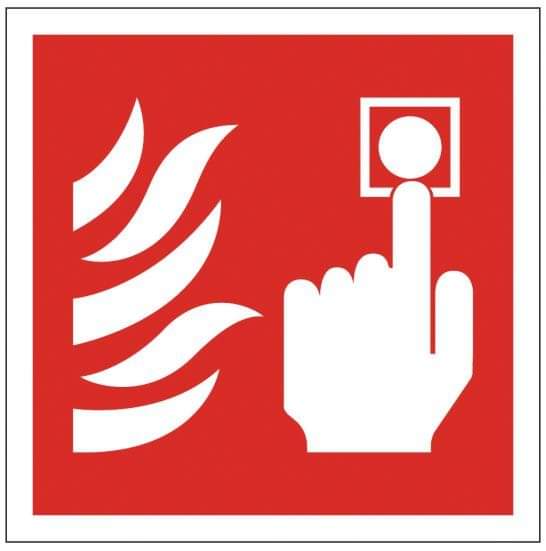
Organization of periodic and regular testing and maintenance of alarms and one of the most important self-protection systems in large and industrial plants is the construction of parallel water wells;

Besides, it's important to set up emergency water systems to turn off the fire.
It's important to put in banners for warning and fire prevention like no smoking,

Procedures to be followed when a fire occurs, emergency numbers, how to use fire extinguishers and alerts and clarify the location of escape routes and exits.
